Active vs. Passive Learning: What Really Works
Want to actively learn this topic?
LernPilot automatically creates quizzes, flashcards, and summaries from any topic.
Active vs. Passive Learning: The Crucial Difference
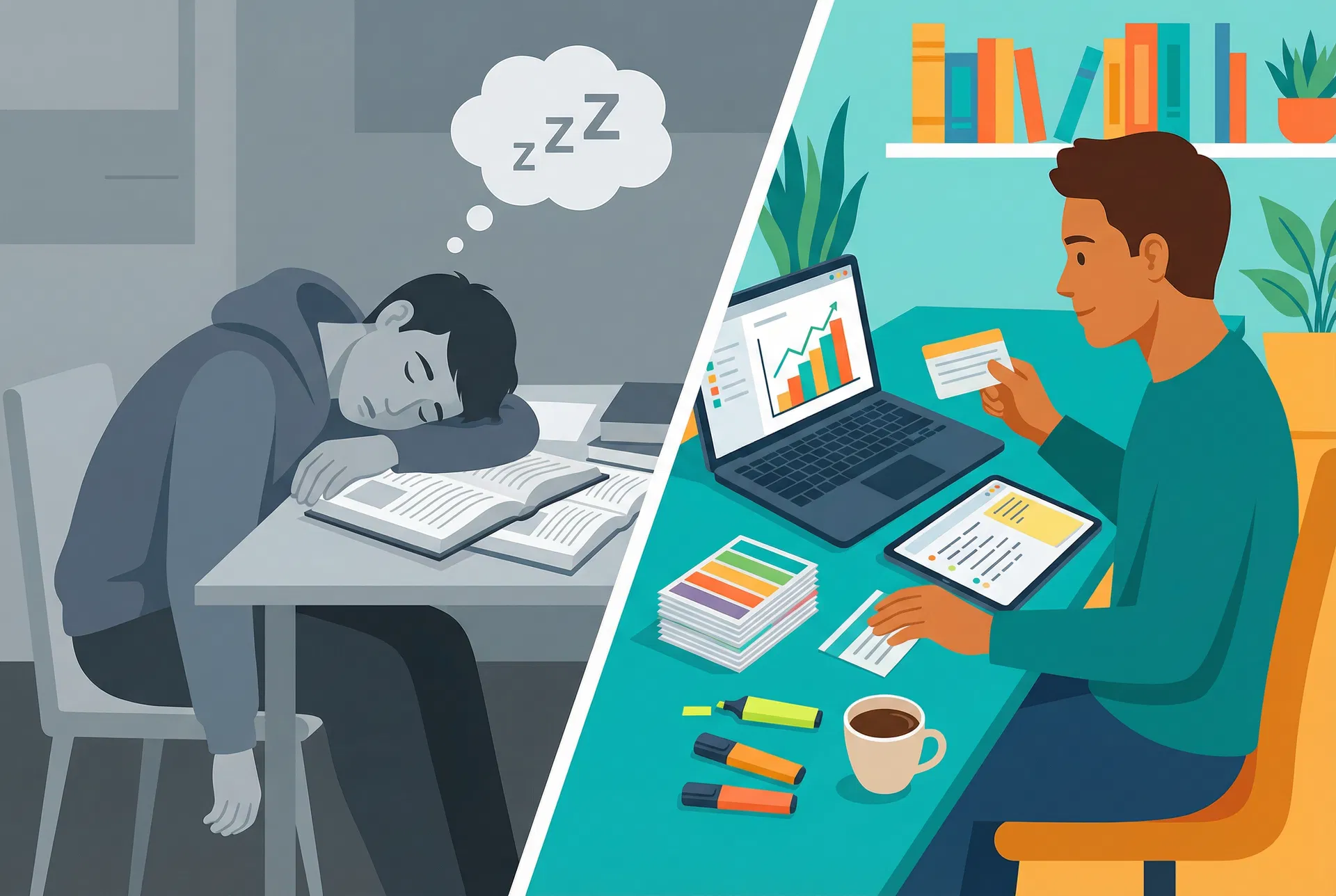
You sit for hours in front of your notes, highlighting important passages and reading your summaries over and over. Yet in the exam, nothing comes to mind. Sound familiar?
The problem: You are learning passively. And passive learning methods are, according to research, the most ineffective of all.
What is Passive Learning?
Passive learning means you only absorb information without actively processing it:
- Listening to lectures
- Reading and highlighting texts
- Reading through summaries
- Watching videos
- Copying notes
The problem: Your brain barely stores information that just "flows through" into long-term memory.
What is Active Learning?
Active learning means you process, apply, and retrieve information:
- Answering questions (without looking)
- Explaining concepts in your own words
- Solving practice problems
- Using flashcards with self-testing
- Having discussions
- Creating mind maps
The Learning Pyramid: Convincing Numbers
Research shows dramatic differences in retention rates:
| Method | Retention after 24h |
|---|---|
| Lecture | 5% |
| Reading | 10% |
| Audio/Visual | 20% |
| Demonstration | 30% |
| Discussion | 50% |
| Practice/Application | 75% |
| Teaching others | 90% |
The 3 Most Effective Active Learning Methods
1. Retrieval Practice
Instead of re-reading information, try to retrieve it from memory. Close your book and write down everything you know. Then compare.
2. Elaboration
For every fact, ask yourself: "Why is this so?" and "How does this connect to what I already know?" These connections strengthen neural pathways.
3. Interleaving
Instead of repeating one topic for hours, alternate between different topics. It feels harder but leads to better long-term learning.
Practical Comparison
Passive: You read the chapter on photosynthesis three times.
Active: You read it once, close the book, draw the process from memory, explain it to a study partner, and answer quiz questions about it.
Result: The active method takes less time and delivers significantly more.
How LernPilot Makes Active Learning Easy
- AI-generated quizzes: Automatically created questions from your study material
- Spaced Repetition flashcards: Scientifically optimized review intervals
- AI Tutor: Explain concepts and receive instant feedback
- Study groups: Discuss with others and teach what you have learned
Conclusion
Stop spending hours reading passively. Invest your time in active methods — you will retain significantly more with less effort. The key is: Do not just absorb, but retrieve, apply, and explain.
© 2026 LEIT Smart Solutions GmbH. All rights reserved.
Ready to deepen this knowledge?
Upload your materials and LernPilot automatically creates flashcards, quizzes, and a personalized study plan.
No credit card required • Cancel anytime