The Perfect Learning Environment: Your Path to Maximum Learning Success
Want to actively learn this topic?
LernPilot automatically creates quizzes, flashcards, and summaries from any topic.
The Perfect Learning Environment: How to Optimize Your Workspace for Maximum Learning Success
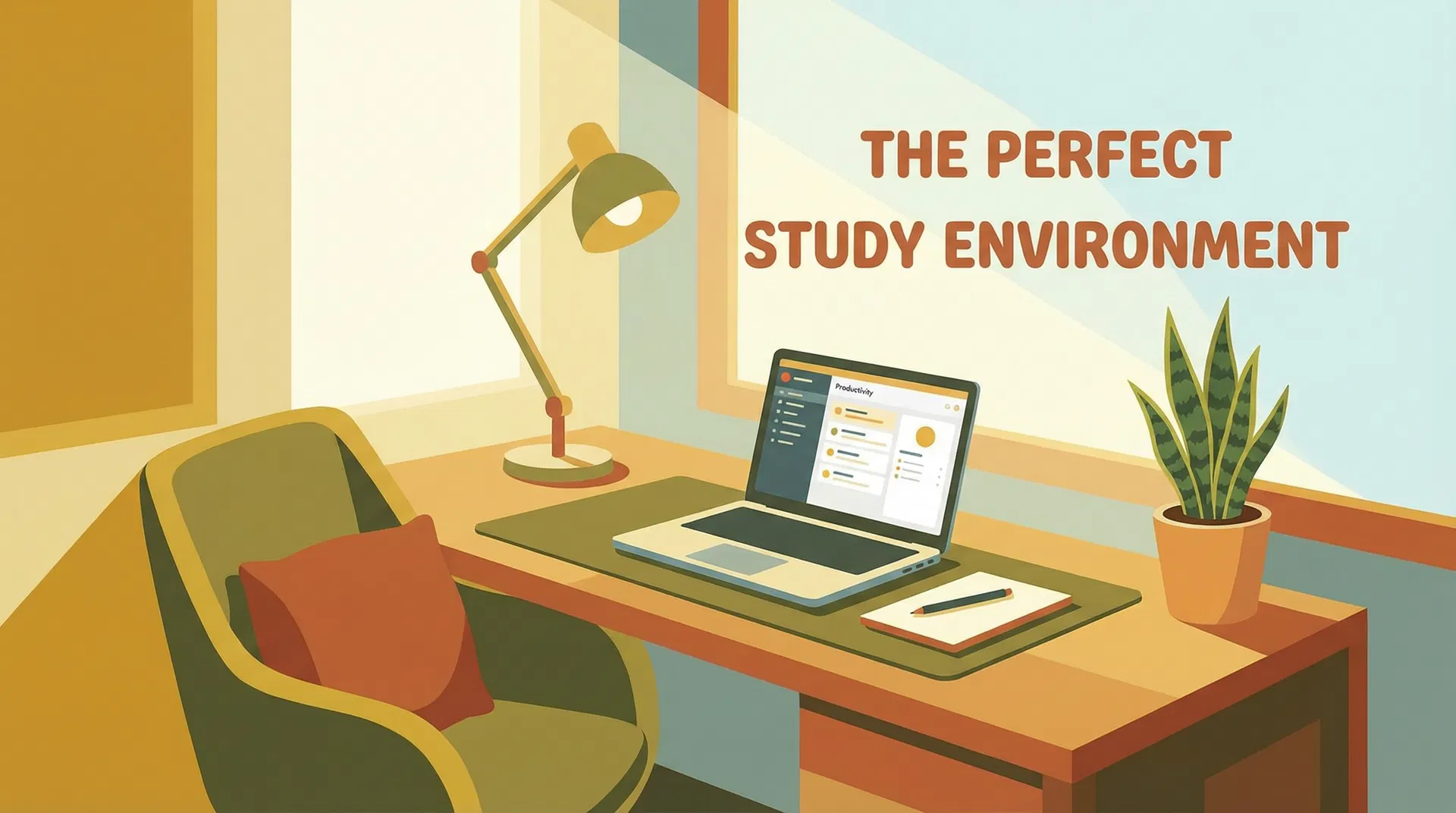
Imagine sitting at your desk. The sun gently streams in, your documents are neatly organized, and you feel a deep concentration that effortlessly guides you through complex topics. Sounds like a dream? It doesn't have to be! Designing your learning environment is far more than just aesthetics – it's a powerful lever for your productivity, concentration, and ultimately, your learning success.
In a world full of distractions and constant overstimulation, the ability to focus deeply on a task becomes a superpower. Your workspace plays a crucial role in this. Studies consistently show that a well-designed environment can increase productivity by up to 40%. But how exactly do you set up this ideal space? This comprehensive article will guide you through scientifically proven principles and practical steps to create your personal learning oasis. We'll delve deep into aspects of lighting, ergonomics, organization, acoustics, and digital hygiene, showing you how to strategically use these elements to unleash your full learning potential.
Why Your Learning Environment Is More Than Just a Place: The Psychology Behind It
The importance of the learning environment extends far beyond practical aspects. It subtly but profoundly influences our psyche, mood, and cognitive abilities. It's an interplay of visual, auditory, and tactile stimuli that our brain constantly processes.
The Impact on Concentration and Productivity
A messy desk can lead to a messy mind. The cognitive load caused by clutter is real. Every extra object, every unfinished task that enters your field of vision, unconsciously demands attention and consumes mental energy that should ideally be reserved for learning. A study by the Princeton University Neuroscience Institute, for example, showed that physical clutter can significantly impair the ability to concentrate on a task.
An optimized environment, on the other hand, minimizes distractions and creates a mental space for focus. It signals to your brain: “Work/learning happens here.” This can even lead to a form of conditioning, where simply entering your workspace shifts you into a productive mode.
The Role of Well-being and Motivation
Nobody likes to learn in an environment that feels uncomfortable or uninspiring. A pleasant workspace promotes well-being and can boost intrinsic motivation. If you feel comfortable at your desk, you are more likely to stay longer and engage more deeply with the learning material. Factors such as pleasant lighting, a comfortable seating position, and even the presence of plants can positively influence mood and reduce stress, which in turn improves learning ability.
The 7 Pillars of an Optimal Learning Environment: Your Roadmap to Success
To optimize your learning environment from the ground up, we will look at seven key areas that you can actively shape. Each of these areas contributes significantly to your learning success.
1. Lighting: Your Natural Energy Booster
Light is not just for seeing; it influences our biorhythm, mood, and alertness. The right lighting can prevent fatigue and promote concentration.
- Daylight is golden: Wherever possible, position your desk to benefit from natural daylight. Daylight, especially in the morning, helps suppress melatonin production and release serotonin, making you feel more awake and positive. A study in the Journal of Clinical Sleep Medicine showed that employees with more daylight in the workplace reported better sleep quality and fewer depressive symptoms. Try to place your desk near a window, ideally so that light comes in from the side to avoid glare on your screen.
- The right desk lamp: If daylight is insufficient or it gets dark, a good desk lamp is essential. Look for a color temperature of 5000-6500 Kelvin (K), which corresponds to neutral to cool white light. This spectrum resembles daylight and promotes concentration. Warm white light (below 3000K) is more suitable for relaxation. A lamp with a dimmable function and an adjustable arm allows you to place the light exactly where you need it and adjust the intensity to the time of day. Avoid direct glare on your screen or in your eyes.
- Indirect lighting: Supplement your main light sources with indirect lighting, for example, using a floor lamp that casts light onto the ceiling or wall. This reduces harsh shadows and creates a more pleasant, even illumination of the room.
2. Ergonomics: Your Body as a Partner, Not an Obstacle
Back, neck, or head pain is not only unpleasant; it also massively distracts from learning. Ergonomic setup protects your body and allows you to stay focused for longer periods.
- The chair is key: Invest in an ergonomic office chair with adjustable height, armrests, lumbar support (for the lower back), and ideally a synchro-mechanism that supports movement. Your feet should be flat on the floor or rest on a footrest, with your knees at an angle of about 90 degrees. The backrest should follow the natural curves of your spine.
- Screen at eye level: Position your monitor so that the top edge of the screen is roughly at eye level. The distance to the screen should be 50-70 cm. Use a monitor stand or stack of books if necessary. Make sure you don't have to bend your neck to look at the screen. If using a laptop, an external keyboard and mouse, as well as a laptop stand to raise the screen, are recommended.
- Keyboard and mouse: Your keyboard should be positioned so that your forearms are parallel to the floor and your wrists remain straight. An ergonomic mouse can prevent wrist discomfort. Avoid bending your wrists while typing.
- Regular movement breaks: Even the best ergonomics cannot replace movement. Get up for 5-10 minutes every 45-60 minutes. Do stretching exercises, walk around briefly, or get a glass of water. The Pomodoro Technique (25 minutes of work, 5 minutes of break) is an excellent framework for this. These short breaks improve blood circulation, prevent fatigue, and help maintain concentration. Studies show that regular short breaks can increase productivity and well-being.
3. Order and Minimalism: A Clear Mind in a Clear Space
A tidy desk is a reflection of a tidy mind. Visual clutter can lead to mental clutter and significantly impair your ability to concentrate.
- Only the essentials on the desk: Follow the principle of minimalism. Keep your desk free of anything not directly needed for your current learning task. Pens, notepad, current book – that's it. Everything else belongs in drawers, shelves, or boxes. A tidy space reduces cognitive load and signals to your brain that it can focus on the task at hand.
- A place for everything: Every object should have its designated place. This saves time searching and prevents clutter from accumulating. Use filing systems, drawer organizers, or magazine files to organize your materials.
- Digital organization: The digital world is just as important. Structure your files and folders on your computer logically. Use meaningful file names. Regularly clear your desktop and download folder. A tidy digital workspace reduces stress and saves time finding information.
- Regular tidying up: Take 5-10 minutes at the end of each study day to tidy your desk and prepare it for the next day. This provides a positive conclusion and a fresh start.
4. Acoustics: The Power of Silence (or the Right Sound)
Noise can be the biggest distraction. The ideal acoustic environment depends heavily on your personal preference, but the goal is always to minimize disruptive sounds.
- Silence is best for most: For many people, absolute silence is the best prerequisite for deep concentration. If you live in a noisy environment, noise-canceling headphones can be a worthwhile investment. They actively filter out ambient noise and create an oasis of calm.
- White noise or Lo-Fi music: If silence makes you restless or you cannot completely eliminate background noise, white noise, brown noise, or nature sounds (e.g., rain, ocean waves) can help mask other sounds and create a calming soundscape. Many also find instrumental Lo-Fi music without vocals beneficial, as it's not distracting but creates a pleasant atmosphere. Experiment to find what works best for you.
- Sound absorption: Carpets, curtains, bookshelves, and even wall art can help absorb sound in the room and reduce reverberation, improving acoustics.
5. Digital Hygiene: Your Smartphone as a Friend, Not an Enemy
The smartphone is the biggest concentration killer of our time. Every notification, every glance at it pulls you out of your flow and requires significant mental effort to get back to the task.
- Phone out of reach: During study, place your smartphone in another room, switch it to airplane mode, or at least to
Ready to deepen this knowledge?
Upload your materials and LernPilot automatically creates flashcards, quizzes, and a personalized study plan.
No credit card required • Cancel anytime